Inspiration not as a writer but as a needlewoman.
I was always bewitched by the gorgeous illustrations in Les Tres Riches Heures du Duc de Berry. French, early 15th century (Joan of Arc era), with a magnificent painting for each month, mostly featuring countryside activities and fabulous châteaux that must have been an inspiration for Pauline Baynes, when illustrating the Narnia novels.
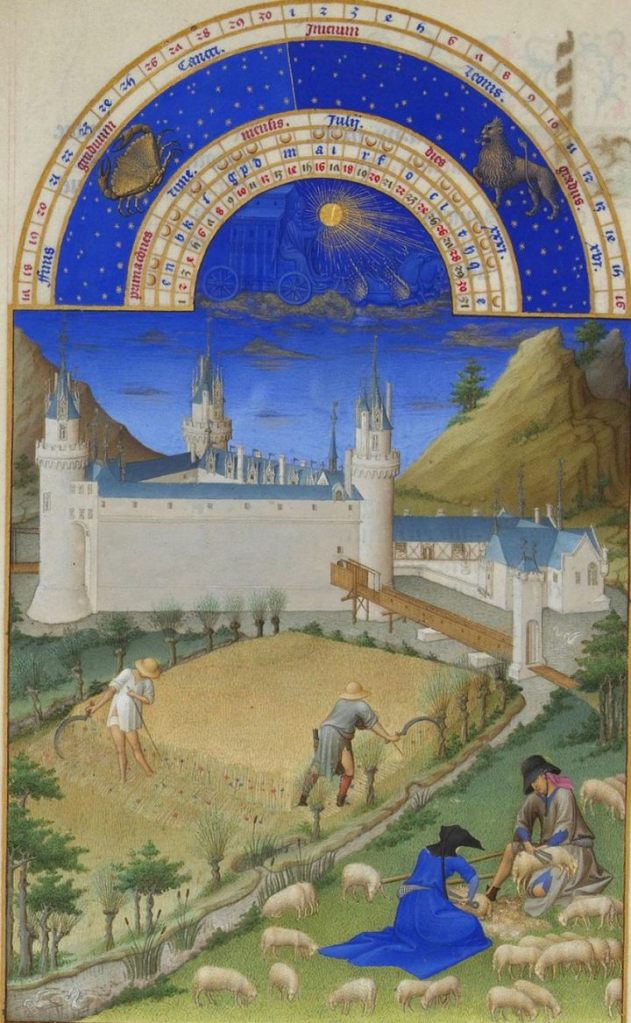
Many years ago, I couldn’t resist making an applique embroidery copy (a very loose copy) of one of the pictures, July, with cornfields being harvested, sheep being sheared and swans gliding by the château of Poitiers.

Why this one of all of them? Cornflowers and poppies, two flowers that I love.
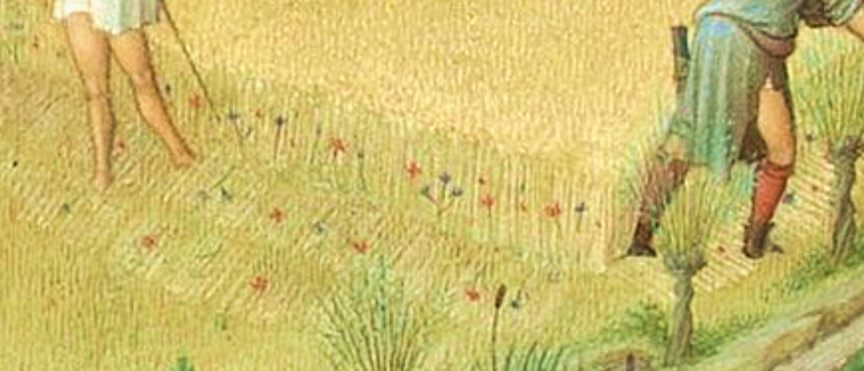
They make such a vivid contrast and once upon a time, they would have been seen in every field of wheat or barley, along with corncockles, corn chamomile, corn marigolds – the clue’s in the name. Cornfield flowers grow where the soil is regularly disturbed, as in ploughed. Or mined, shelled and bombed, which is why the poppy is the symbol of remembrance from World War I for the British, and the cornflower is the same for the French.
Cornfield flowers were seen everywhere, until we introduced such effective weedkillers that they vanished. Perhaps, as we become a wee bit more ecologically minded they will return to be a common sight. I have a mass of wild flowers growing in and around my garden, but no cornfield flowers until this year.. This year, I’ve deliberately planted them and at last, there they are. This time, though, I probably won’t get out the embroidery silks.

 Thorne Moore
Woman of many talents!!😊
LikeLiked by 1 person
It’s not that good. I’d do better now.
LikeLiked by 1 person
I love the pictures in the book, but I could never have translated them into embroidery. You have clearly been hiding that talent under a bushel. I grew poppies and cornflowers last year and they looked so wonderful I repeated the sowing this year with some flax added-in. Nothing came up. It might be partly down to the fact that I ‘enriched’ the soil all round the garden and native poppies etc prefer their soils on the poor side.
LikeLiked by 1 person
I think the land must have had an unusual composition after World War I. I’m stripping off some more old turf and breaking the soil up but not adding to it, to see if my wild flowers seed themselves. And I’ve found some flax under the bird feeder, so when the seeds are ready, I’ll add them too.
LikeLiked by 1 person