I know pronouns are a big issue at the moment, with people claiming whatever pronoun fits their gender identity. I suppose I should go with She, Her, because I do, did, and always will, identify with human beings defined as female at birth and, as a result, subjected, over several millennia, to oppression, silencing, abuse, violence, rape and murder, by a not very pleasant patriarchy.
So yes, I’d say She/Her, to align myself with the sisterhood. But by preference, I wouldn’t, because I’d like my identity to be defined by what’s between my ears, not what’s between my legs. I certainly wouldn’t go for They/Them, because I am not plural. I am defiantly singular and unique. So my pronouns of choice are I/Me.
That aside, the pronouns that really fascinate me are the ones that don’t come into this gender identity debate at all. Second person pronouns. The French have TU and VOUS. The Germans have DU and SIE, the Welsh have TI and CHI. In all cases, the first is singular and familiar, and the second is plural, but also singular and respectful.
How does this work in a society growing far less deferential? I learned Welsh over the decades, with varying degrees of successful, ranging from total failure to pathetically dismal. (I am just hopeless at all languages except my own). Back in the 1980s, puzzling over what to use when, I asked a native Welsh-speaker who was working with me if things were changing regarding the use of Ti and Chi? Were younger people more inclined nowadays to use Ti, instead of the respectful Chi? Her answer was yes, it was changing, but her explanation shocked me. She had grown up in the 40s and 50s, in a household where her father always addressed her mother with the familiar Ti, but her mother addressed her father with the reverential Chi. After I’d finished gaping at the thought, I went on to refer to it in my first novel, A Time For Silence, but it still had me reeling.
One reason for my shock might be the fact that the English language doesn’t have the same distinction. It doesn’t but it did, once upon a time. English had Thou (thee, thy) for singular and intimate, and You or Ye for plural and respectful. Somewhere along the way, thou/thee vanished except in poetry and churches. When, exactly? Does anyone know, because I’d love to. No special reason. I am just intrigued.
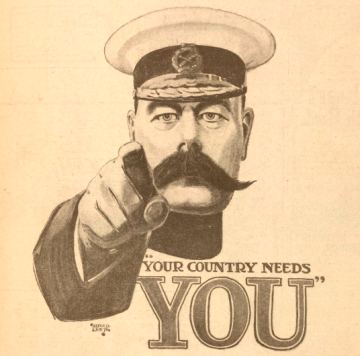
The King James Bible, produced in 1611, is sprinkled liberally with thee and thou art, but it was using deliberately archaic language to prove that it was founded in antiquity, and therefore true. It harked back to the Coverdale Bible translation of 1535. Did either reflect the way ordinary people were speaking, in 1611 o 1535? Shakespeare used thou but he was being poetically. If it was still in use at the beginning of the 17th century, it was on the way out. By 1660, George Fox, founder of the Quakers, was complaining about the general failure to use thou, seeing the common use of you for second person singular as a mark of arrogance and pride – no-one was willing to be addressed as a lowly servant.
Understandable, maybe. I wouldn’t want to be talked down to. But why did the English language throw off this distinction when other languages kept it, and keep it still? You have to admit there’s a big difference between you, the one person I’m speaking to, and you, the crowd out there, queuing for my autograph (and if not, why not?).
I still can’t decide if it’s a diminution of the language or a liberating democratisation. It’s just a puzzle.


I’ve often wondered why the UK doesn’t have a version of the two ‘you’s when every country in Europe I can think of, does. I used to watch Pobol y Cym and in the 1980s there was an elderly couple playing a reverend and his wife. Both of them used ‘chi’, the formal version, when addressing each other. At least there was an equality to it! I suppose you’ve already answered my rumination at the beginning of this with the likes of Thou and Ye.
LikeLiked by 1 person
If the loss of Thou means we address everyone with respect… I hadn’t noticed!
LikeLiked by 1 person
Like saying, ‘With all due respect…’
LikeLiked by 1 person
no offence meant.
LikeLiked by 1 person
😀
LikeLike