When I was very young, we had a car. A Morris 8, black, with a starting handle, little orange fingers that stuck out of the side as indicators, running boards and a blind in the small rear window that we children managed to break but never admitted to, which was okay because it was never discovered. Who on earth would use a blind on the rear window? Anyway, after numerous outings and holidays in said Morris 8, breaking down at every hill and junction (including Hyde Park corner, where a hub cap fell off and my father stopped and walked back for it), the car was sold and we managed without for a few years in the early 1960s.
This meant holidays involving public transport and suitcases full of sheets, towels and pillowcases. My father came across an advert for a caravan site in the Isle of Wight, and that was where we went for four years, including a couple of years in June when prices were cheaper, something that would have my parents facing fines, these days, because schooling is more important than holidays.
WRONG. Our family holidays made a far deeper impact on me than times tables and Janet and John stories. Our visits to the Isle of Wight probably account for me being a writer. They set fire to the imagination because they were about stepping, for two magical weeks, into an alternative universe, utterly different to my home in Luton.
I never read Enid Blyton’s Famous Five books, although I have a fair idea of them from watching Comic Strip’s Five Go Mad In Dorset. What I had, instead, was Mount Cleves caravan site, Niton Undercliff. Everything about those holidays was an adventure, starting with the coach trip to Portsmouth, the long sweaty queue, sitting on cases, to board the ferry, the sea crossing to Ryde pier, and the train trundling along it to deliver us to the no.16 bus down to Ventnor and along to loop around Niton Undercliff to the Sandrock hotel bus stop – even the bus stop was magical and strange. Then we’d walk up the long drive to Mount Cleves, a rather gracious slightly French house serving as HQ for the caravan site.
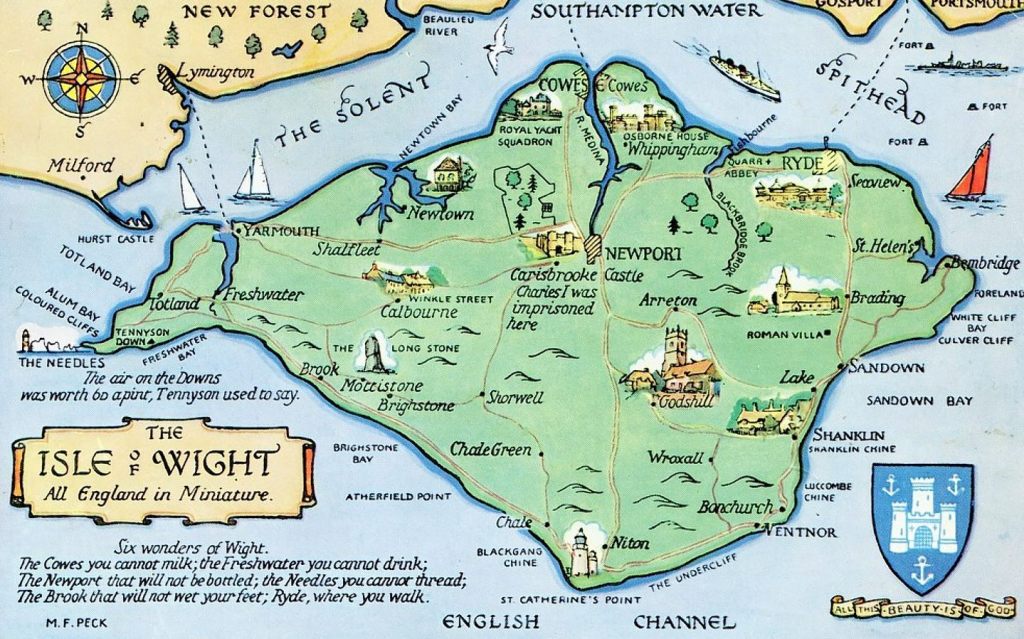
We’d been to other caravan sites, and were used to long rows of tin cans packed like sardines. This one was different. Acres of undercliff, around which were scattered just twelve caravans. Real caravans. None of your plush fully-wired and plumbed mobile homes, with showers and TVs. These had gas lamps that hissed faintly and big plastic water carriers to be filled at stand pipes. Toilets were in a rather damp side-wing of the house, home to some very large crickets (I think they might have been cockroaches, but hey). A former conservatory, always hot and sunny, served as a laundry, redolent with the smell of Omo and scorched cotton and the buzz of bluebottles.
The Undercliff in the isle of Wight is a geological feature that probably means Mount Cleves (now a private residence again), won’t be there until Doomsday. A rather slippery clay area next to the sea is backed by serious cliffs of greensand and chalk inland. The springs emerging under the cliffs create frequent landslides, which is unfortunate for anyone owning a house there. Whole roads have disappeared over the years.
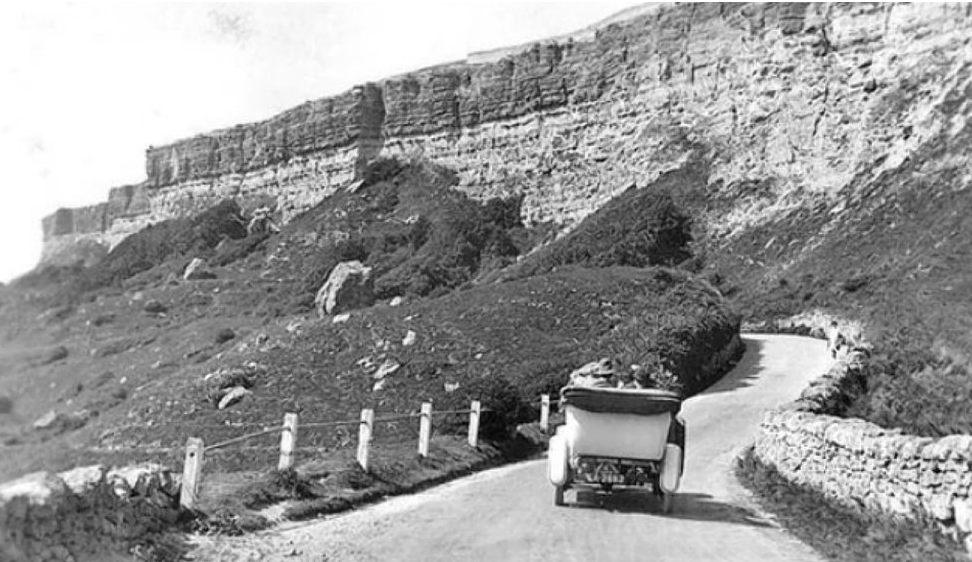
Our caravan site, nestling under the inland cliffs, was an adventure ground of winding paths, hidden corners and unexpected surprises, like the lily pond in which a viper lived (possibly apocryphal), or the weather vane on a rocky promontory that I later discovered was a pinnacle nicked from Carisbrooke castle. Not far below us was St Catherine’s Lighthouse, and since the English Channel is prone to fog, the boom of the foghorn offered a frequent soundtrack to our stay, along with woodpigeons and crickets. A path down from the drive led to the Buddle Inn, with a smuggler’s barn where children were allowed to enter, with their ginger beer and crisps (salt to be added from a screw of blue paper). Best of all, it had a central island with a model of Carisbrooke Castle, a haunted house and St Catherine’s lighthouse. For the price of a small coin, probably a 6d, the house would light up to reveal a ghost, the lighthouse would do something (can’t remember what) and a donkey would emerge from the castle gate.

Simple pleasures. Not a Gameboy or smart phone in sight. Not even a really dumb phone, just cards and Ludo for when it was too wet to do anything.
If it wasn’t raining, we would carry on down from the Buddle Inn, beside a bubbling brook thick with horsetails, to Castle Haven and Puckaster Cove and the joys of pebbles, sandcastles and sea. But adventure didn’t mean just going down. We could go up too. Within the caravan site, paths and flights of steps wound up the cliff.

Along one ledge were a couple of caves, one with a fireplace, obviously a smuggler’s den. I can still remember the heart-stopping thrill of discovering the highest moss-grown flight of steps, leading up to… a door. The sort of door in the rock beyond which a wizard or dragon surely lived. Not quite. It lead out through a tunnel of bushes to the top of the cliff, where a footpath took us (a fairly exhausting evening tramp for little legs) to Blackgang Chine.
Blackgang Chine is an amusement park, possibly not on the scale of Disneyland, but it was fine for us, a mixture of Edwardian interest and post-war vulgarity. On our first visit, the chine itself (a deep gorge) was very much still there, with a steep path zigzagging down to the sea, illuminated at night by strings of coloured lights.
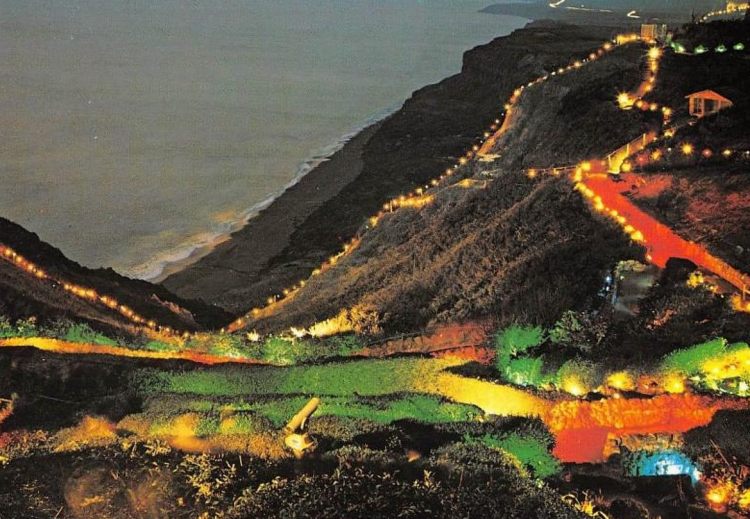
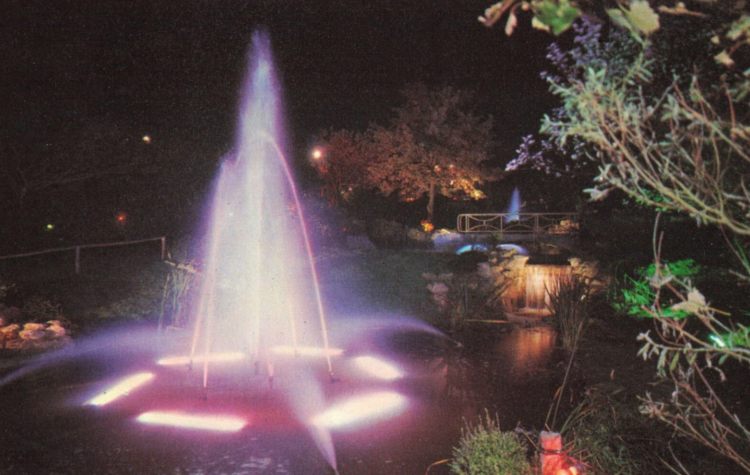
By our second visit, most of it, with the path, had collapsed, but the amusement park was still thriving, with a gnome’s garden, water features with fountains lit by changing colours, a maze and a model village of Isle of Wight landmarks (always cigarette butts floating around the model of Ryde pier.) Like I said, simple pleasures.
Never EVER go back.
We did, years later. The bus stop with its stone benches is in ruins, the caravan site is no more, the castle and donkey have gone from the Buddle Inn, most of Blackgang Chine has collapsed, attractions being moved further up onto flat ground and now consisting of a dinosaur park and talking pig rubbish bins. There are chunks of the model village still visible, buried under hedges.
The thing about getting old is that you are increasingly subject to fits of unbearable nostalgia. Fits that lead you to do really daft things, like creating a miniature Blackgang Chine, c 1963, in the garden. I’ve got the gnomes and the coloured lights. Still working on the model village and the donkey. I know, second childhood, but why fight it?
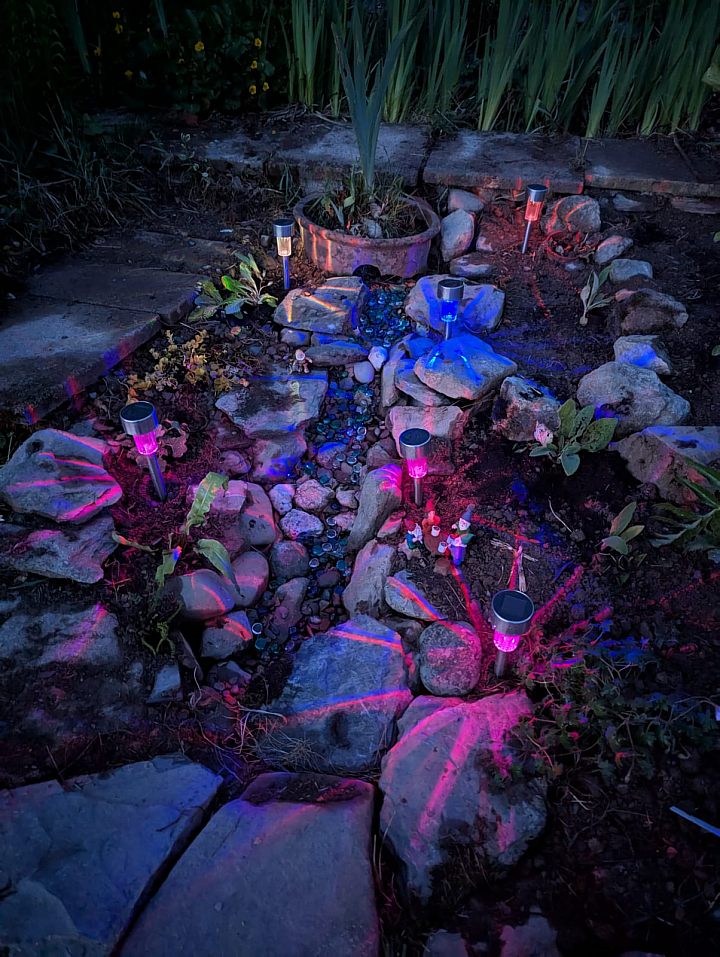


Love your homage to Blackgang Chine!
LikeLiked by 1 person
thank you. I don’t mind going batty in my old age.
LikeLike
Only saying today that we’ve never been to either the Isle of Wight or the Isle of Man. But if we can’t go to the Isle of Wight of sixty years ago … I won’t go. Lovely post, Thorne.
LikeLike
you can come to my version instead. 🙂
LikeLiked by 1 person
I will!!!!😊
LikeLiked by 1 person